




FROM "COOKBOOK" APPROACH TO THEORETICAL FRAMEWORK: DR. PHAM HIEP SYSTEMATIZES MICRO-RESEARCHING
29/07/2026
Share


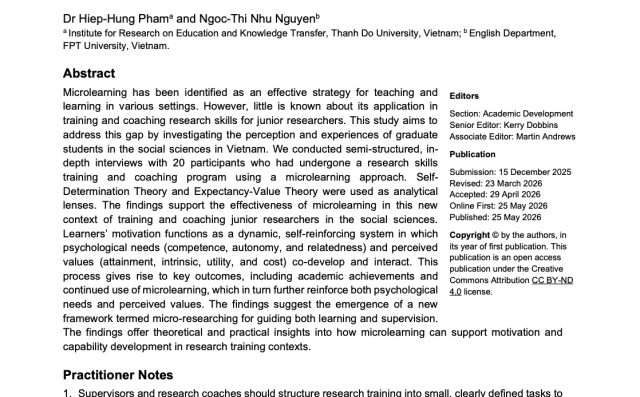
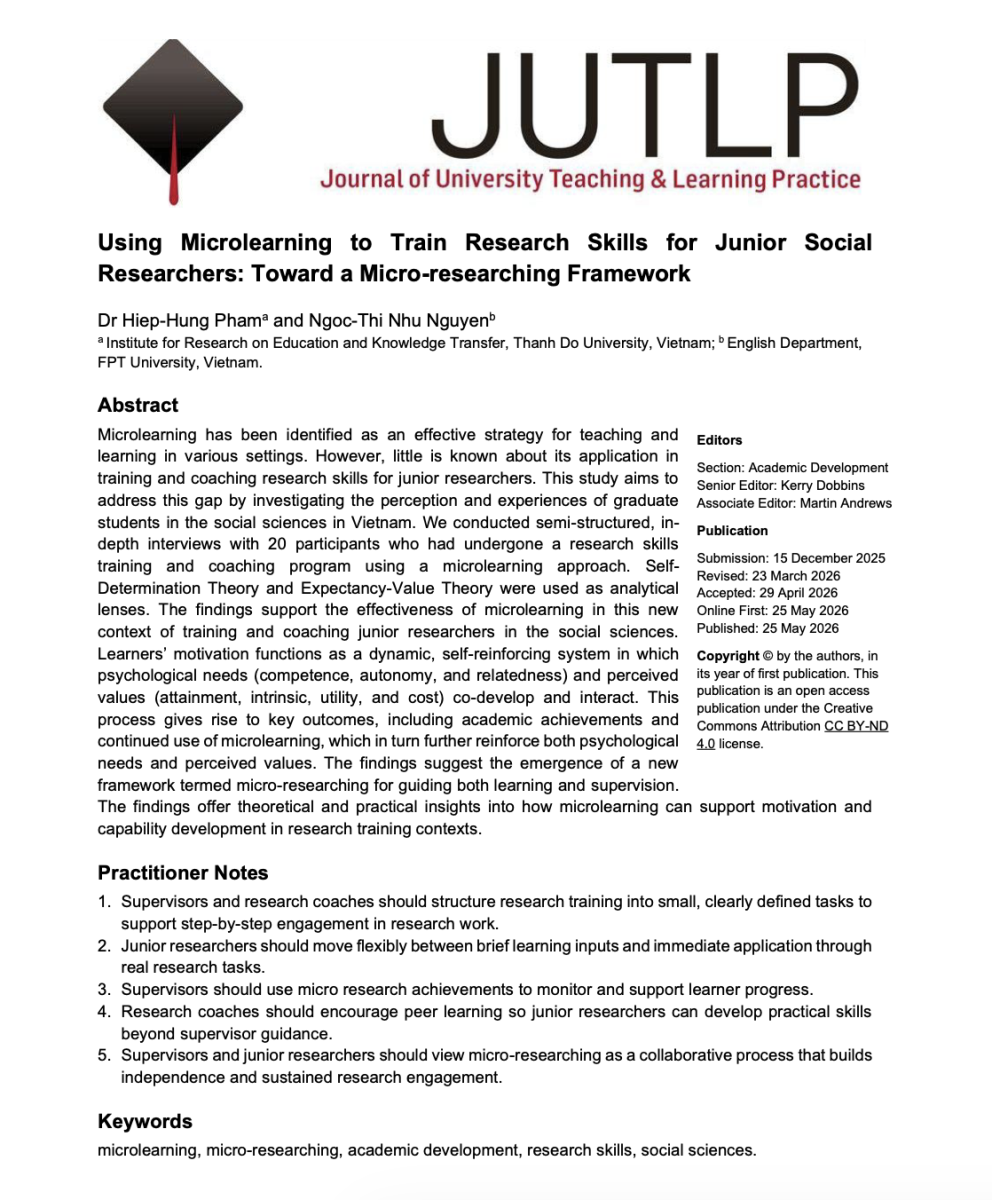
With the publication of his new paper, "Using Microlearning to Train Research Skills for Junior Social Researchers: Toward a Micro-researching Framework" in the Journal of University Teaching & Learning Practice (JUTLP) (co-authored with Nguyen Thi Nhu Ngoc from FPT University), Dr. Pham Hiep-Director of the Research Center for Knowledge Transfer (REK Institute)-has successfully introduced the "Micro-researching" model into the international theoretical landscape.
This conversation explores not only about turning a "cookbook-style" research method into a rigorous academic framework, but also his aspiration to elevate Vietnam's theory-building capacity and reduce reliance on Western-centric models.
Reporter: When and under what circumstances did you first learn about this method, or the terms "microlearning" and "micro-researching"?
Dr. Pham Hiep: The idea actually sparked from a very ordinary, everyday experience: reading cookbooks. I noticed how brilliantly they organize information-every recipe is broken down into simple, concrete steps, all neatly packaged within just a couple of pages. Readers can follow them immediately and effortlessly.
This got me thinking about applying a similar approach to teaching and learning scientific research. Historically, academic research has been viewed as highly complex, heavy on theory, and overwhelming for beginners, often leading to procrastination. I asked myself: why not break the research process down into small, clear steps, much like a cooking recipe, to make it more digestible?
As I researched educational trends, I realized my idea perfectly aligned with "microlearning"-an emerging global trend. Building on that foundation, I specialized it into "micro-researching," which breaks the research process down into granular tasks so learners can execute them and see immediate results.
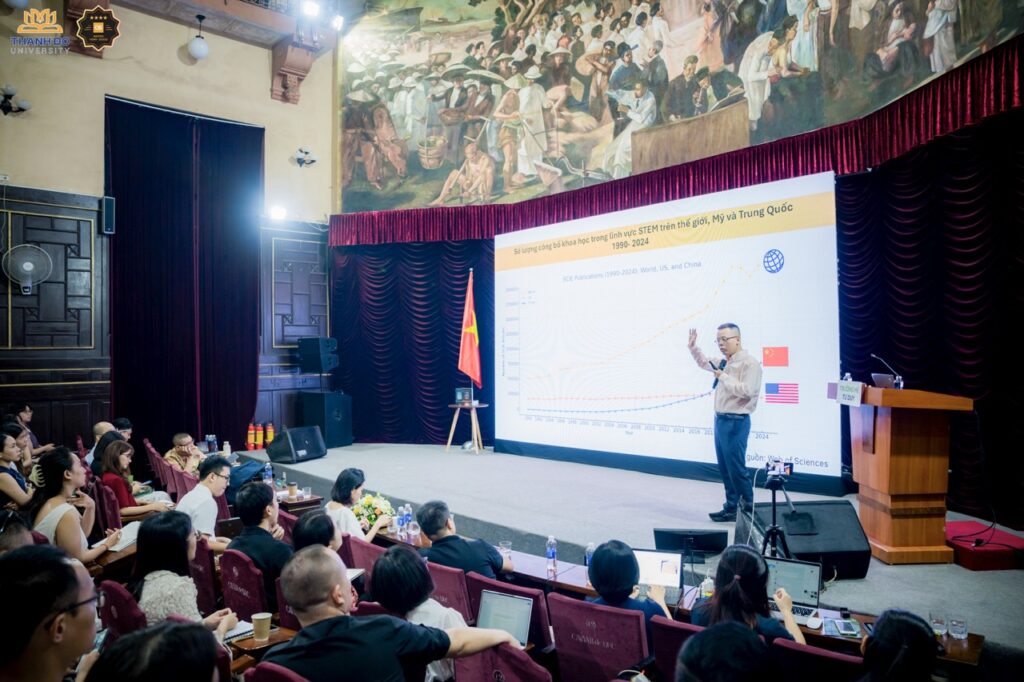
Dr. Pham Hiep delivering a lecture at Nguy Nhu Kon Tum Hall, Vietnam National University, Hanoi, as part of the Summer School of Thinking program.
What Sets Micro-Researching Apart from MOOCs
Reporter: Globally, major online learning platforms like Coursera and edX have successfully utilized the concept of bite-sized learning. What makes your micro-researching model fundamentally different and unique?
Dr. Pham Hiep: Structurally, my micro-researching model shares similarities with platforms like Coursera or edX by breaking knowledge down into short videos or bite-sized assignments. However, the core difference lies in the focus. While those platforms often prioritize technical design, interface, and instructor convenience, I focus heavily on the psychological state of the learners when I actually teach.
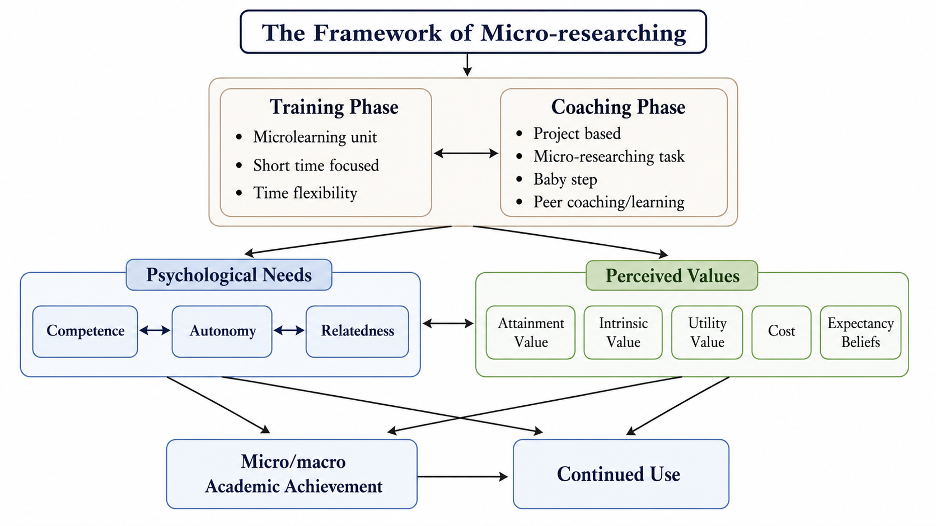
In the paper, my micro-researching model integrates elements of Self-Determination Theory and Expectancy-Value Theory, as these are the exact factors I actively apply during my teaching.
I always aim to foster intrinsic motivation by giving students a sense of autonomy and competence. When a massive research project is broken down into micro-steps, the psychological pressure evaporates. Students gain the confidence that "I can do this," which simultaneously satisfies their motivational needs and raises their expectancy of success.
At the same time, we help them see the direct value of research-not just the intellectual joy of discovery, but also its practical utility in their careers or future plans. This deep psychological management and close mentorship are things massive open online courses (MOOCs) have yet to fully address, and that is what sets my practice of micro-researching training apart.
"Scientific research doesn't have to be a monumental burden. Start with 'micro-steps' and break it down just like a recipe for a great dish."
Real-World Impact and the Power of "Baby Steps"
Reporter: Having applied this method to training and coaching, how do you evaluate its real-world effectiveness? Could you share a specific success story?
Dr. Pham Hiep: Quantitatively, the effectiveness of this method has been proven through the achievements of trainees in the Research Coach in Social Sciences (RCISS) program at the REK Institute. Many participants have successfully leveled up their academic credentials-advancing from Master's to PhD, Bachelor's to Master's, securing prestigious scholarships, or publishing in international journals. For many, it was the very first international publication of their careers.
Beyond individual milestones, this approach is exceptionally effective for workflow management. By applying this micro-philosophy to our broader research community, everyone can easily find a suitable task to start with. Instead of placing the weight of an entire project on a novice, the work is sliced: one person writes a brief literature review, another cleans a specific dataset, while another designs the questionnaire. This division reduces pressure and allows everyone to contribute immediately.
Within this micro-division, members learn from one another through a collaborative synergy. For instance, a strong academic writer can learn data processing from a quantitative specialist, while the quantitative specialist refines their writing skills from their peer.
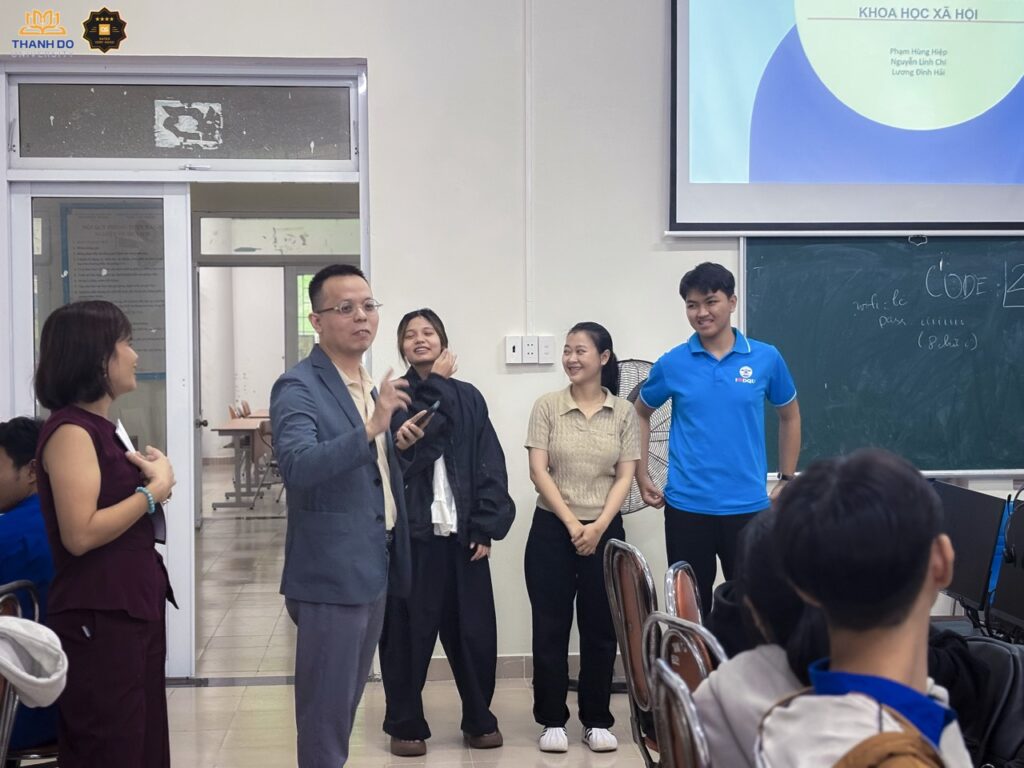
Dr. Pham Hiep sharing the micro-researching method with students at Quang Nam University.
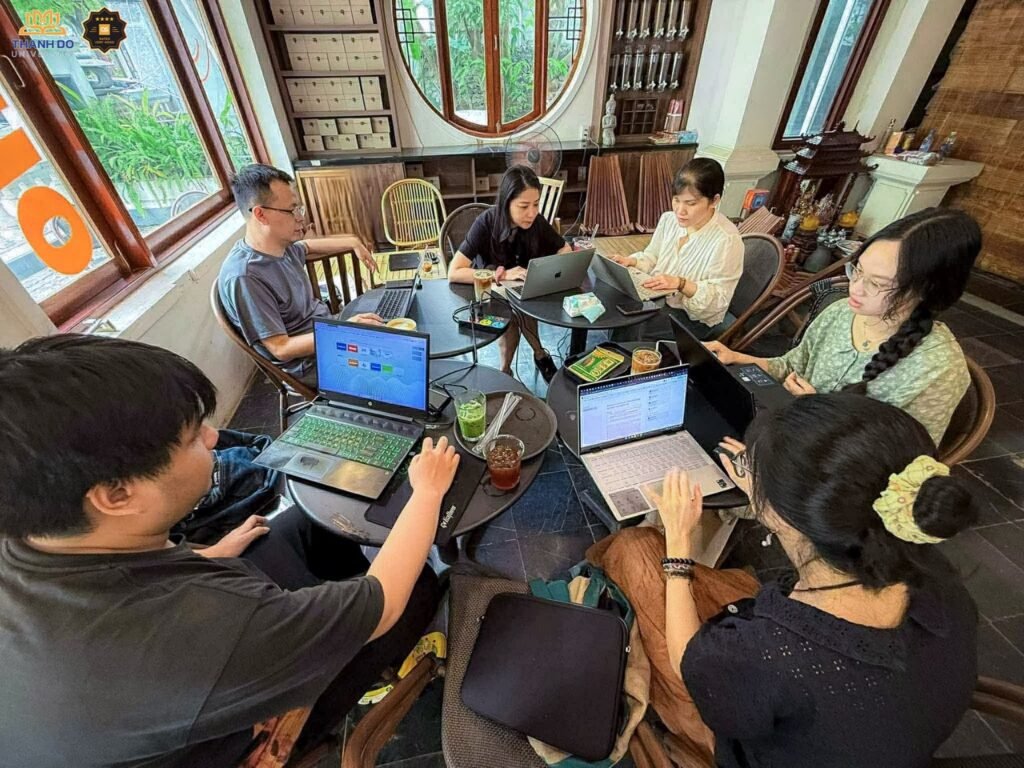
Dr. Pham Hiep practicing micro-researching with research team members at the REK Institute.
RCISS Trainee Destinations
Universities and institutions where RCISS trainees have received scholarships and enrolled:
|
|
|
|
| United Kingdom:
France:
Netherlands:
Other:
|
|
|
| Australia:
New Zealand:
|
| Japan:
South Korea:
Taiwan (China):
China:
Hong Kong (China):
Southeast Asia & India:
|
However, what I value most is how this method celebrates "baby steps." For a novice researcher, completing a small paragraph or processing a single batch of data is a major milestone.
I often share the story of one exceptional student as an inspiration. When they first joined my class, they knew virtually nothing about scientific research. Yet, through persistence and accumulating these micro-progressions, they successfully secured admission to and graduated from the IAE Paris Sorbonne Business School-a program renowned for its highly rigorous graduation requirements. Real-world success stories like this solidify my confidence in this method.
Integrating Micro-Researching into Formal Curricula
Reporter: From the perspective of an educational administrator, what are your hopes for integrating "micro-researching" into formal education? If you had the opportunity to design such a course for a university, how would it operate?
Dr. Pham Hiep: My hope is that "micro-researching" gains wider recognition and becomes a viable pedagogical option for undergraduate and especially postgraduate curricula. In my view, this approach is best suited for early-career researchers-including both young students and mature professionals who are just stepping into the research landscape.
If given full autonomy to design a formal course, I would implement a flipped classroom model based on the experiments I’ve conducted.
At Home: Students watch bite-sized video lectures (only a few minutes long per topic) whenever they have a spare 10 to 15 minutes during the day. They can flexibly learn via computers or mobile phones anytime, anywhere.
In Class: Face-to-face class time would no longer be spent on dry lectures. Instead, it would be entirely dedicated to advanced discussions, Q&As, and hands-on guidance as students work directly on their active research projects.
This interactive classroom dynamic fosters higher-quality connections between peers and with the instructor, ensuring learners feel supported and never lost on their academic journey.
Elevating Asian Scholars on the Global Academic Map
Reporter: Looking back on the journey from running practical research spaces to publishing this theoretical work, what does this paper mean to you personally, and what impact do you hope it will have on the Vietnamese academic community?
Dr. Pham Hiep: Systematizing this model and successfully publishing it in an international journal like the Journal of University Teaching & Learning Practice (JUTLP) was a milestone I set for myself years ago. In academia, people often focus heavily on journal metrics like Impact Factor or Scopus quartiles. While I don't deny their importance, what drew me to JUTLP is its precise focus on the niche of teaching methodology-which is the very core of this study.
Previously, I published a paper sharing practical insights from operating the RCISS center in Vietnam. However, transitioning from sharing practical experiences to establishing a formal theoretical framework represents a major academic leap forward for me.
Of course, publication is only the first step. I hope that this work will be read and cited by the global academic community, validating its practical value. More importantly, this publication serves to assert my research capacity in my chosen field, while helping to "level up" Vietnamese and Asian scholars on the global academic map-a space historically dominated by Western theories and models. Developing and publishing our own theoretical framework proves that Asian scholars can actively contribute to shaping global educational methodologies.
Thanh Do University
Address: Km15, National Highway 32, Hoai Duc, Hanoi, Vietnam
Hotline: (+84) 934 078 668 - (+84) 243 386 1601
Website: https://thanhdo.edu.vn/
Fanpage: https://www.facebook.com/truongdaihocthanhdo
Recent news