ASSOC. PROF. DR. PHAN THI THANH THAO, PRESIDENT OF THANH DO UNIVERSITY: FROM VALUING TALENTED PEOPLE TO BUILDING AN ENVIRONMENT WHERE TALENT CREATES VALUE
26/10/2026
Share


"If a good idea is praised but never given resources to grow, the organization has not truly valued the person behind it. Opportunities must be open to capable people, with rights tied to responsibility and results."
On October 15, 2026, on behalf of the Party Central Committee, General Secretary and President To Lam signed Conclusion No. 105-KL/TW of the 4th Plenum of the 14th Party Central Committee on attracting and employing talent in priority fields.
According to Assoc. Prof. Dr. Phan Thi Thanh Thao, President of Thanh Do University, talent policy should be judged by the value people create, the problems they solve, their contribution to the organization and society, and whether they have a long-term environment in which to grow.
Three Fundamental Changes and Four Obstacles
The Conclusion calls for building a culture of employing talent. In the President's view, this must start with leaders and be institutionalized in recruitment, task assignment, listening, evaluation, rewards and development opportunities.
The first change is to move from emphasizing degrees, seniority and titles to assessing competence, results, potential and fit with the job. Credentials still matter but cannot replace evidence of real ability, as in the case of a young lecturer with strong research, technology skills and effective teaching methods.
The second is to build a culture that respects difference, encourages debate and accepts responsible innovation. Finland is a notable example of combining professional autonomy, trust and accountability instead of rigid control. Innovation does not mean lax discipline: organizations must distinguish well-grounded risk from irresponsibility or rule violations, and learn from failures.
The third is to turn a talent culture into concrete governance across recruitment, task allocation, performance review, appointment, career development and rewards. At Thanh Do University, the WILL orientation calls for lecturers who design learning experiences, connect with enterprises, run projects and guide students in solving real problems. People with ideas on programs, teaching methods or partnerships should be able to propose, test and share models.
Similarly, in developing an AI-ready university, lecturers should not be judged merely by whether they use AI tools, but by whether they choose suitable tools, uphold academic integrity, improve learning quality and build students' independent thinking.
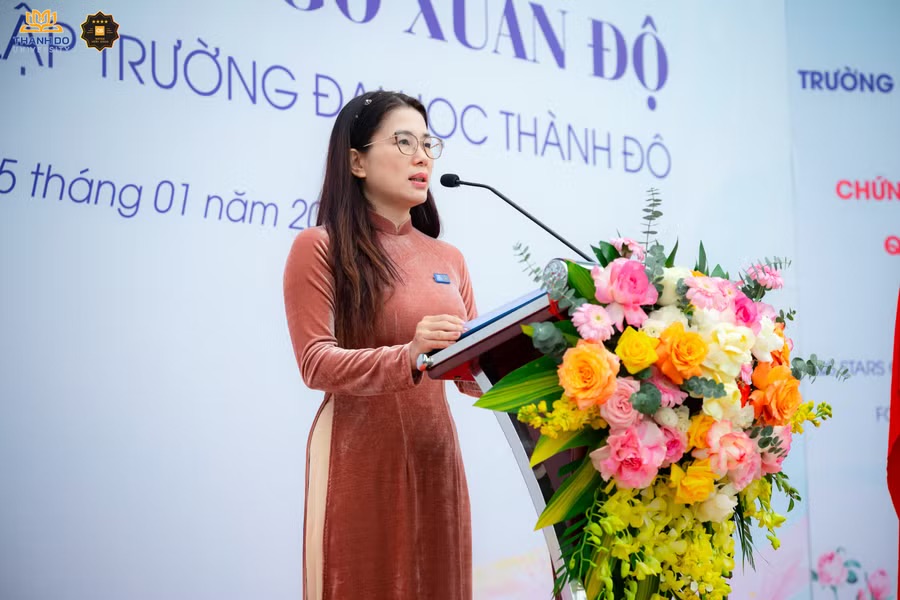
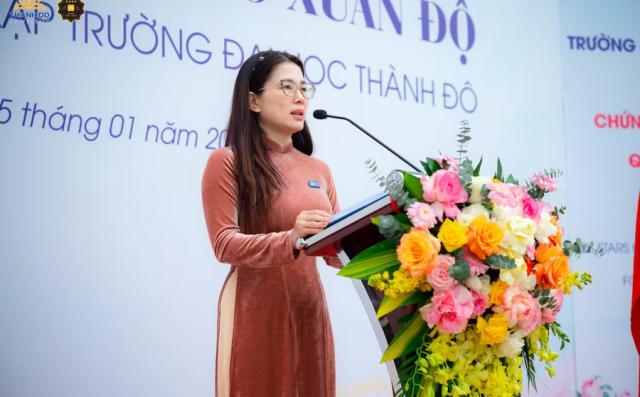
Assoc. Prof. Dr. Phan Thi Thanh Thao, President of Thanh Do University.
Four obstacles need to be addressed: egalitarian thinking and discomfort with difference, which leaves outstanding achievers without fair recognition; procedure-heavy evaluation that counts easily measured outputs such as reports, hours and quantities over quality and real impact; fear of mistakes and avoidance of responsibility, which calls for transparent decisions, clear risk criteria and protection for properly executed initiatives; and limited autonomy and resources, where talented people lack assignments, time, funding, data, collaborators or decision-making authority.
Employing talent is not about privileges for a few. It must be fair and transparent, opening opportunities to capable people while tying rights to responsibility and results.
Five Conditions for an Environment That Values Talent
According to the President, such an environment requires placing the right person in the right job with sufficient authority, sufficient resources and a proper recognition mechanism, so that talent develops through collaboration, innovation and meaningful problem-solving.
The first condition is autonomy grounded in competence and responsibility. In Finland, well-trained teachers choose their methods, and quality is assured through outcomes and continuous improvement rather than administrative checks alone. At Thanh Do University, this applies to new courses, teaching innovation, AI applications and enterprise projects, with clear goals, standards, resources and limits of responsibility.
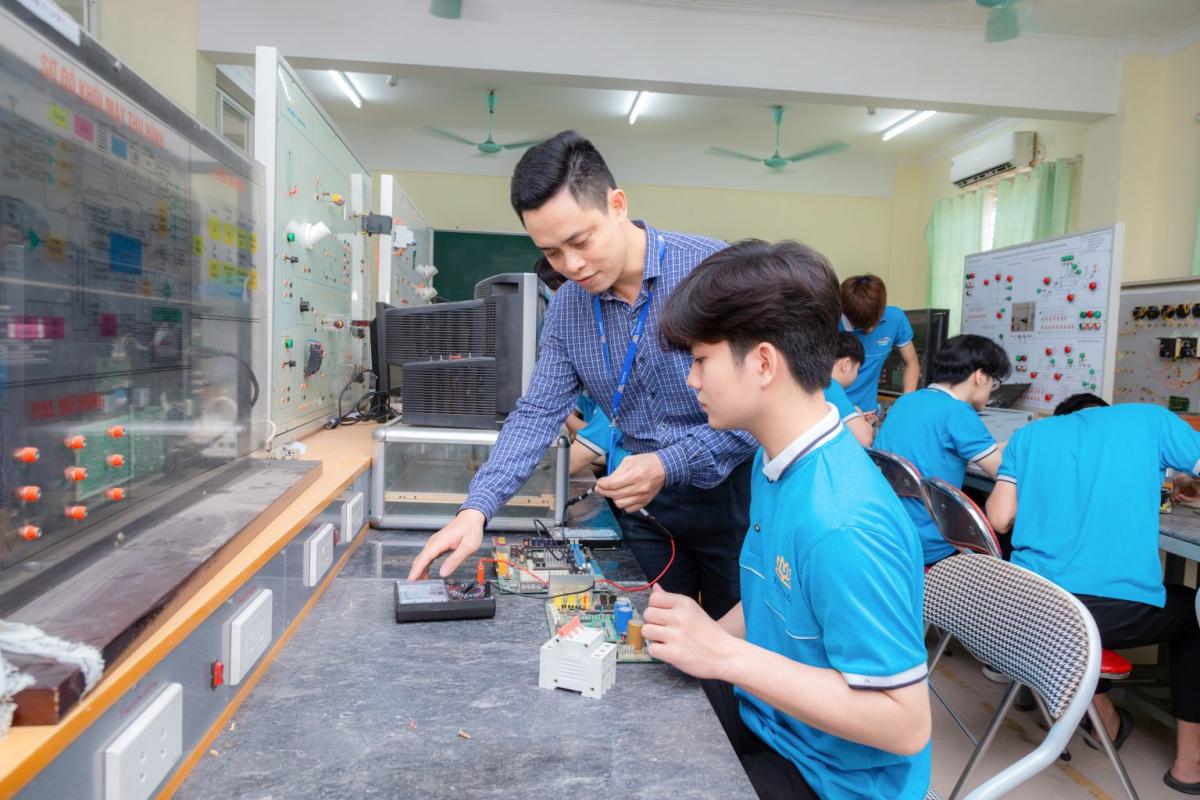
The second is connecting talent with enterprises and real-world problems. Australia's Work-Integrated Learning (WIL) models and ARC Linkage Projects show the value of jointly defining problems, sharing resources, co-developing solutions and evaluating practical value. At Thanh Do University, WILL links lecturers, students and businesses, for example in automotive technology and electrical and electronics engineering, to build prototypes and test their applicability.
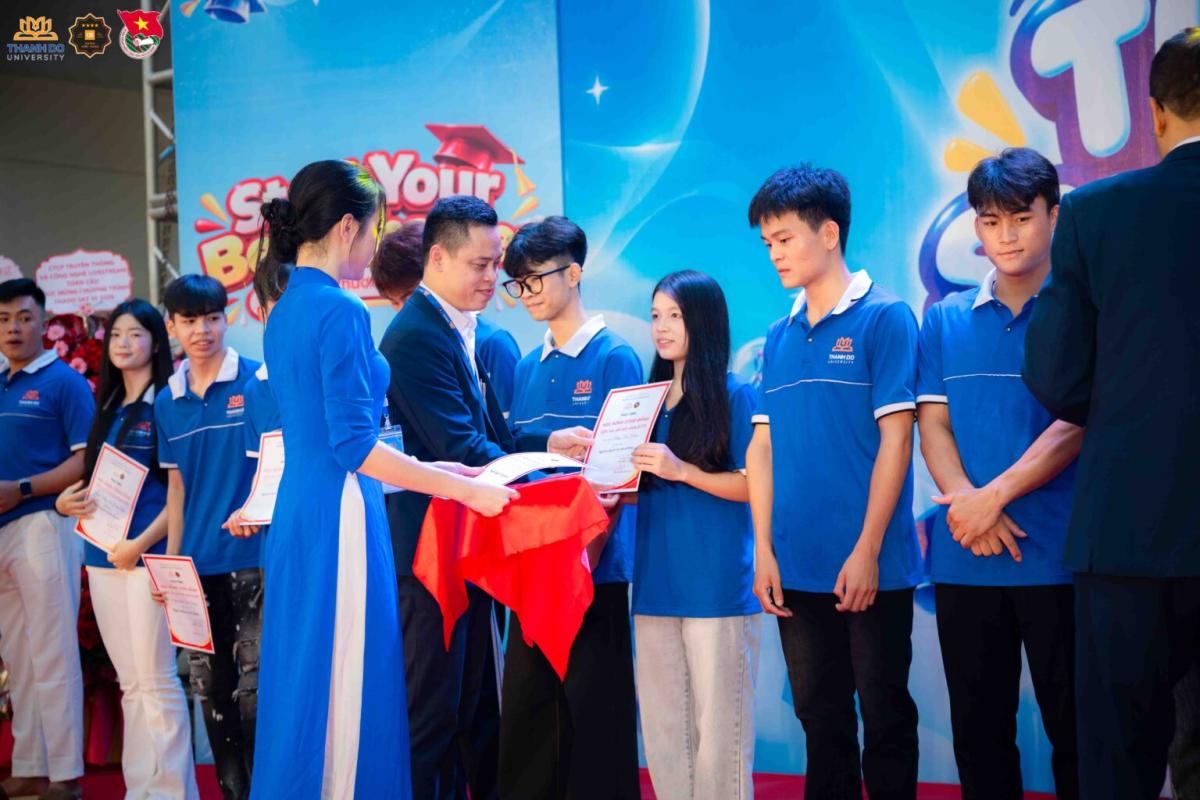
Thanh Do University presents Unigo scholarships to K22 freshmen.
The third is investing resources in promising ideas. Singapore, through A*STAR and CREATE, supports research capacity, international collaboration and access to funding, facilities and networks. At Thanh Do University, the Ngo Xuan Do Postdoctoral Scholarship serves as a mechanism to identify, attract and nurture research talent and to support ideas with application potential through feasibility studies, prototypes, user testing, partner connections and product development, in areas such as AI in education, personalized learning tools and community healthcare technology. Selected projects receive phased support with clear criteria and milestones.
The value of such support lies not only in funding but also in the management signal it sends: listening to ideas, investing selectively and opening a pathway for knowledge to become value. Not all research must be commercialized, but applied research needs a route to market and community use.
The fourth is encouraging creativity with responsible risk management. People who fear failure choose safe options, so controlled pilots should define goals, resources, timelines, evaluation criteria and risk limits from the outset, then decide whether to scale up, adjust or stop. Trust must rest on competence, transparency and professional responsibility.
The fifth is long-term career development. Employing talent is a continuous process from identification and nurturing to deployment and career growth. Following Singapore's approach of linking workforce development to strategic fields, Thanh Do University plans career paths matched to individual strengths: research development for researchers, teaching innovation pilots for innovative lecturers, and authority and resources for those who connect with enterprises.
The best environment for talent is not simply a gathering of capable people, but one where they can use their strengths, collaborate and create value greater than the sum of individual capacities.
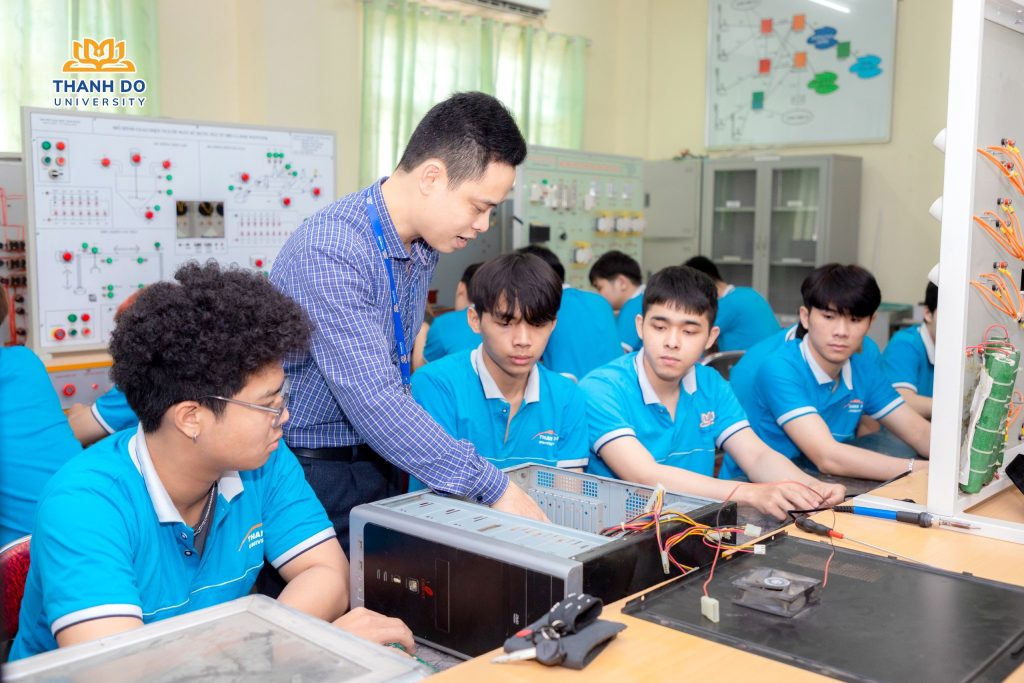
Thanh Do University plans to enroll and train students in semiconductor microchip technology from the 2024–2025 academic year.
Fair Evaluation, Proper Deployment and Commensurate Rewards
Evaluation, deployment and compensation are decisive because they turn talent policy into practice, and reform should proceed in three synchronized directions.
First, evaluation should be based on competence, results and real impact. Degrees, seniority and titles are useful but not sufficient on their own. Universities should not judge lecturers only by teaching hours or publication counts, but also by teaching quality, student progress, research quality and integrity, curriculum innovation, enterprise collaboration and community contribution, with different criteria and review cycles for basic research, applied research, teaching, management and innovation.
Second, talent should be deployed according to competence and development needs. Institutions should define the capabilities they need and the tasks, resources and career opportunities they offer, with two parallel tracks, professional and managerial, so that leading scientists and technical experts can advance without becoming managers. Assignments should come with goals, timelines, autonomy and resources, and results should be reviewed to decide whether to continue, adjust or scale up. At Thanh Do University, the Ngo Xuan Do Postdoctoral Scholarship connects talent discovery, research funding and value creation, supporting promising individuals and groups toward scientific results, prototypes or applicable products.
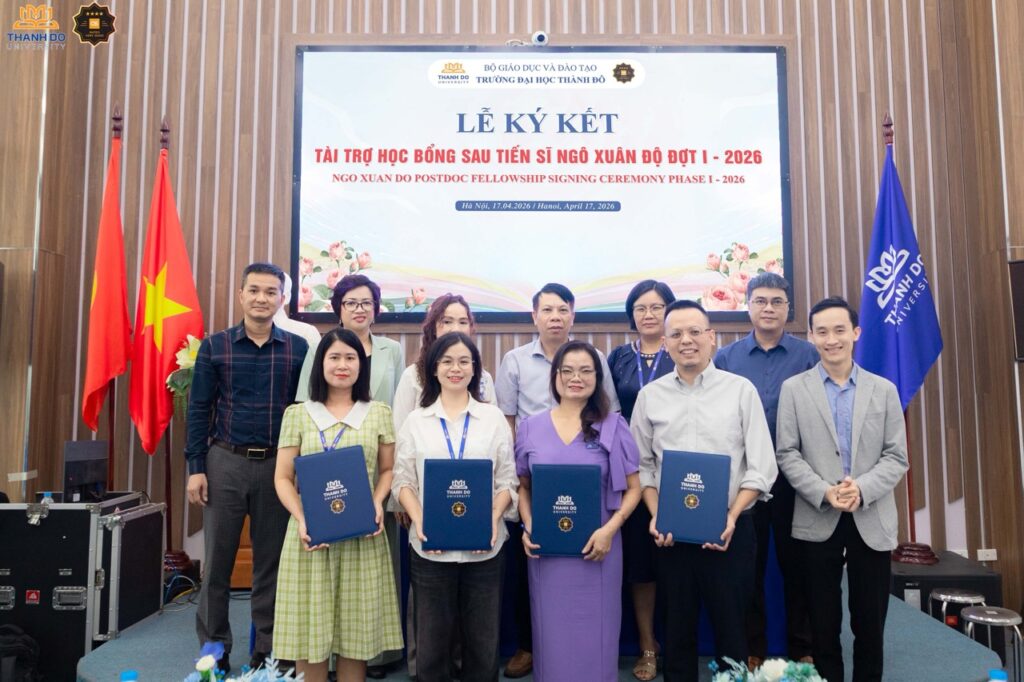
Representatives of research groups sign funding contracts under the Ngo Xuan Do Postdoctoral Scholarship.
Third, rewards should be reformed toward fairness, competitiveness and long-term motivation. Beyond salary and performance-based bonuses, rewards include working conditions, professional autonomy, training opportunities, participation in major projects and career recognition. Within legal and financial limits, universities may explore group performance bonuses, research time support, innovation project funding and international collaboration, and successful initiatives should be recognized both financially and through career opportunities.
When research is transferred or commercialized, intellectual property rules and benefit-sharing principles must be clear from the outset so that lecturers, students, the university and partners understand their rights and responsibilities. Such transparency gives researchers the confidence to innovate.
Retention depends on more than salary: respect, fairness, trust in leadership, autonomy and career prospects all matter. People may leave even with good pay if they are not listened to, lack opportunities to use their abilities or cannot see meaning in their work.
In the President's view, evaluation, deployment and rewards must form one unified system: correct evaluation enables correct assignment, adequate authority and resources allow talent to perform, and fair recognition, commensurate rewards and clear development pathways build motivation, commitment and continued contribution.
Thanh Do University
Address: Km15, National Highway 32, Hoai Duc, Hanoi, Vietnam
Hotline: (+84) 934 078 668 - (+84) 243 386 1601
Website: https://thanhdo.edu.vn/
Fanpage: https://www.facebook.com/truongdaihocthanhdo
Recent news